What Is the Astronaut Crash Game?
Origin and Developer (100HP Gaming)
Astronaut is a crash-style game created by 100HP Gaming, a studio focused on instant and crash titles for online casinos.
The game appeared around 2024–2025 and now sits in many casino lobbies alongside Aviator-type titles and instant win games. Several review sites list Astronaut as a high-RTP crash game with support for many currencies and user interface languages, depending on the casino.
100HP Gaming usually distributes Astronaut under a license from Curaçao, while each casino still needs its own local permissions. Always check both the game supplier data and the casino’s own license page before depositing.
How It Differs from Other Crash Games
Astronaut fits the crash genre but adds several twists:
- Green crystals raise the multiplier step by step.
- Red crystals end the round and wipe the current bet.
- A rare Golden Shield can block the next red crystal once.
- You can cash out fully, take half, or keep everything in play.
- Dual bets allow two separate wagers in the same round.
Traditional crash games simply show a line that rises until it crashes. Astronaut turns this into a crystal path, with extra tools for partial cash-out and risk splitting. That makes the decisions less “all or nothing” and more about gradual risk control.
Gameplay Mechanics and How the Game Works
Placing Bets: How to Stake Before Each Launch
Each round starts with a short betting window. During this time you:
- Choose your stake size for Bet 1.
- Optionally activate Bet 2 for a second, independent wager.
- Set auto cash-out multipliers if you use them.
- Confirm the bets before the countdown ends.
Bet sizes depend on the casino, but many sources list minimum stakes around $0.10–$0.25 and maximum stakes ranging from a few dollars to much higher amounts.
Remember: every stake is at risk on each round. Do not chase losses, and keep total bets within a budget you can afford to lose.
Rocket Ascent and Multiplier Growth
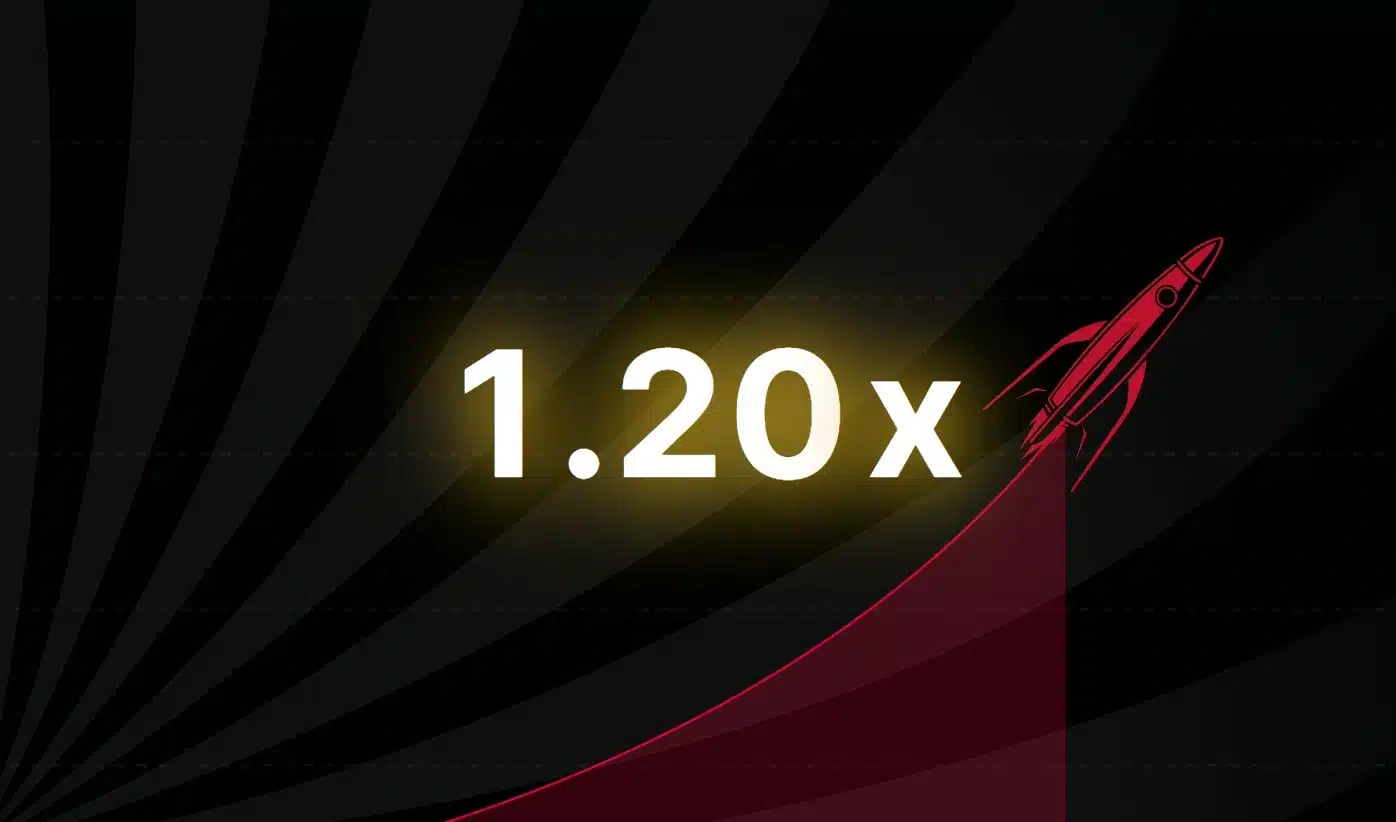
Once the betting window closes, the astronaut’s rocket moves through space, touching crystals. Each green crystal bumps up the multiplier, so your potential payout grows in steps.
Key points during ascent:
- The multiplier grows quickly at higher levels.
- The longer the run continues, the more likely a red crystal appears.
- You can cash out at almost any moment before a crash.
The round ends in two cases:
- You cash out in time and receive stake × multiplier.
- A red crystal appears before cash-out and you lose that specific bet.
Cash-Out Options: Manual vs Auto, and “Take Half” Feature
Astronaut offers several ways to exit a round:
1. Manual cash-out
You click “Cash Out” at your chosen multiplier. This gives maximum control but demands quick reactions, especially at high levels.
2. Auto cash-out
You pre-set a target multiplier. When the rocket hits that number, the game closes the bet automatically. This helps avoid hesitation or lag problems and is useful for strict strategies.
3. “Take Half” (partial cash-out)
This unique feature lets you secure 50% of the current winnings while leaving the other half in the round.
Example:
- Bet: $10
- Multiplier: x5
- Total potential: $50
You press “Take Half”:
- $25 is locked in and moved to your balance.
- $25 stays in play as a new effective stake at the current level.
- If the rocket climbs further, that $25 continues to grow.
- If a red crystal appears next, only the “in-play” part is lost.
This feature is central for many mid-risk strategies in Astronaut.
Risk Element: What Causes the Crash (Red Crystal)
The crash comes from a red crystal. Once it appears, the round stops instantly, and all bets left in play are lost.
Important points:
- The crash point is random, driven by the game’s algorithm.
- Long climbs with many green crystals raise tension but never guarantee anything.
- Even low multipliers can crash early, so no round is safe.
You cannot predict future runs from past history. Every round is independent, even if it “feels” like a big multiplier is due.
Key Technical Statistics
RTP (Return to Player) — Reported Values & What They Mean
Different sources list slightly different RTP values for Astronaut:
- Around 96% on some casino review sites.
- About 95.69% to 95.7% in one technical summary.
- Up to 97–98% in other reviews.
This gap likely comes from different builds, casino settings, or outdated data. Always check the in-game info panel in your casino client; that value is more relevant than generic listings.
What RTP means in practice:
- It is a long-term statistical measure, not a promise.
- Even at 96% RTP, you can still lose everything quickly.
- Short-term sessions can swing far above or below the stated figure.
Volatility Level & Its Impact
Astronaut is usually described as a high or very high volatility game.
High volatility means:
- Long stretches of small returns or full losses are possible.
- Occasionally, the game produces very large multipliers.
- Bankroll swings can be sharp, especially with aggressive cash-out targets.
For most players, that means:
- Smaller, more conservative stakes make more sense.
- Cash-out targets like x2–x5 are less dramatic but easier on the budget.
Bet Limits (Min/Max Stake) and Maximum Multiplier / Payout
Common figures across public sources:
- Minimum stake: around $0.10–$0.25.
- Maximum stake: from roughly $2.50 up to about $150, depending on casino integration.
Maximum multipliers and wins also differ by site:
- Some pages mention caps like x10,000.
- Others show max multipliers around x48,000 or similar figures.
The actual top payout depends on:
- Game math configured in that casino.
- Currency and table limits.
- Any local maximum-win policy in the casino’s terms.

Provably Fair System: How Fairness Is Ensured
Several Astronaut resources mention the use of “provably fair” technology.
In a typical provably fair setup:
- Each round’s result is based on a combination of server seed and client seed.
- A cryptographic hash of the server seed is shown before the round.
- After a period, the seed is revealed so players can verify results.
You can usually find a “Fairness” or “Provably Fair” link in the game or casino interface. That page explains how to check specific rounds. If it is not present, use extra caution and rely only on licensed sites.
Special Features That Make Astronaut Stand Out
Golden Shield Mechanic: Protecting Against Crashes
The Golden Shield is a rare symbol that gives one-time protection against the next red crystal.
How it works in simple terms:
- You collect green crystals as usual.
- A Golden Shield appears and activates.
- The next red crystal is blocked; the round continues instead of crashing.
In some versions, the shield can also switch the game to a kind of “boosted” mode with higher multipliers. Exact rules can vary, so read the in-game help in your casino client.
Take-Half (Partial Cash-Out) — Securing Part of Your Winnings
We touched on this earlier, but it deserves its own section.
“Take Half” lets you:
- Lock in half of the current payout.
- Keep the other half riding for more risk.
This is powerful because it breaks the usual all-or-nothing choice. You can:
- Use Take Half early, then chase a higher level with the rest.
- Use it late, once you reach a personal target.
Many mid-risk strategies use Take Half as a middle step between “cash out low” and “go full high-risk”.
Dual Bet Feature: Making Two Bets per Round
Astronaut lets you place up to two bets in each round, using separate panels.
Typical use cases:
- Bet 1: low cash-out target, such as x1.5–x3.
- Bet 2: higher target, such as x5–x10 or more.
This way you can secure modest results with one bet while leaving the other open for bigger swings. The bets are independent; one can crash while the other cashes out.
Autoplay & Auto Cash-Out: Strategies & Use Cases
Autoplay allows you to preset:
- Number of rounds.
- Stake sizes for each bet.
- Target multipliers for auto cash-out.
Possible uses:
- Running a low-risk “grind” strategy at small stakes.
- Testing a pattern of multipliers to see how it behaves.
- Strict discipline: you lock rules once and avoid manual impulses.
If you use autoplay, combine it with hard loss limits and time limits. It is easy to forget how fast crash rounds move.
Interface, Design and User Experience
Game Layout: Multiplier Tracker, Chat, History
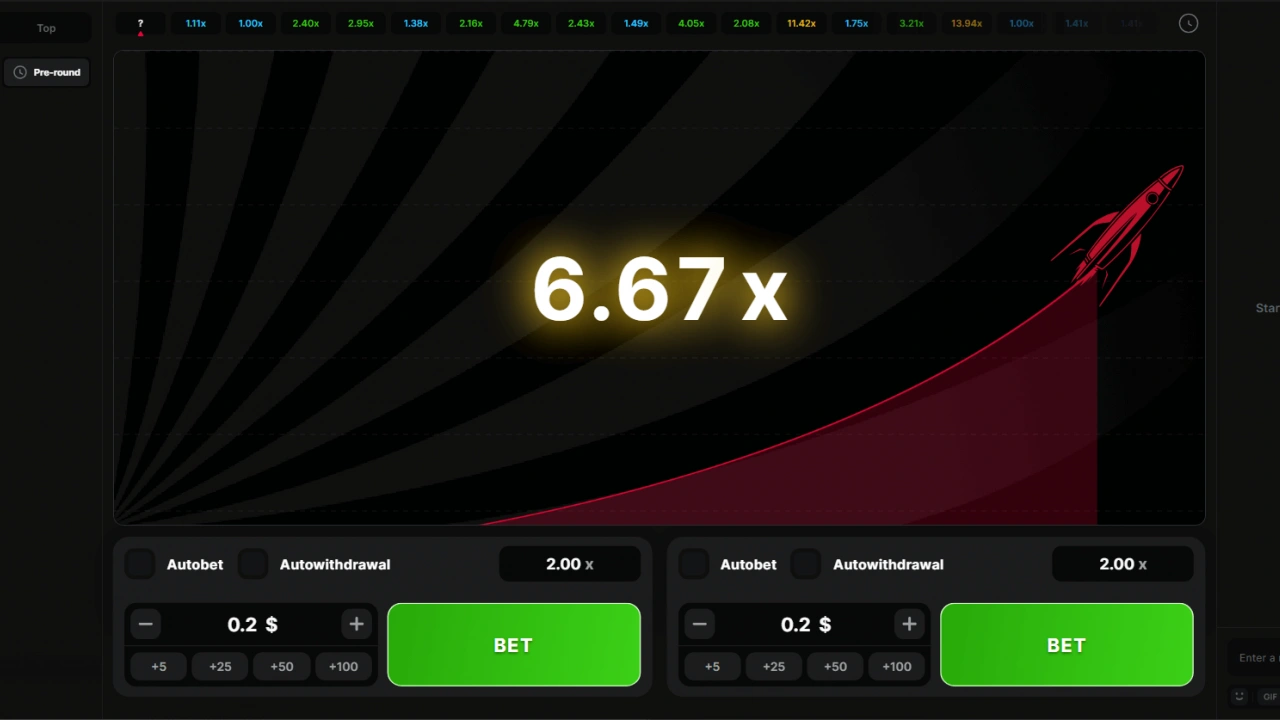
Astronaut’s interface usually includes:
- Main window with the rocket and crystals.
- Live multiplier tracker.
- Bet panels for Bet 1 and Bet 2.
- Recent round history with multipliers.
- Chat panel in some casino clients.
The layout is clear enough that you can follow the multiplier while still keeping an eye on your auto cash-out or Take Half options.
Mobile vs Desktop Experience — Platform Compatibility
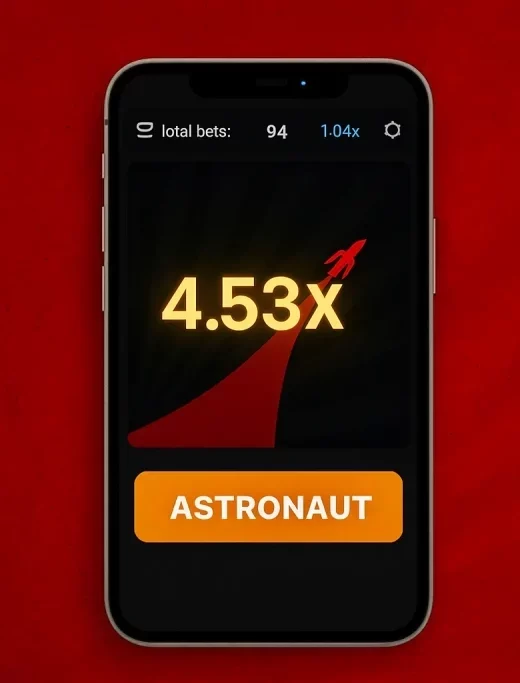
Astronaut runs in most modern browsers and is optimized for phones, tablets, and desktops.
Common traits:
- Touch controls for cash-out and Take Half on mobile.
- Full mouse and keyboard support on desktop.
- The same dual-bet and auto features on all devices.
Many sites mention that Astronaut keeps working even with weak connections, since each round is short and the data usage low.
Statistical Tools: Round History, Top Results, Bet Tracking
Most Astronaut clients show useful stats:
- Round history with crash multipliers.
- Top win multipliers over a recent period.
- Your own bets and cash-outs for each round.
Use these only as reference. They do not predict future runs, but they help review your own discipline and see if you stick to your rules.
Strategies and Tips for Playing Astronaut Crash
Safe Beginner Approach: Conservative Cash-Outs (e.g. 2x–3x)
For new players, one calmer approach is:
- Use small bets, far below your session budget.
- Set auto cash-out around x2–x3.
- Play a set number of rounds, then stop and review.
This method lowers the risk of chasing very high multipliers and burning the bankroll early. It will still lose money in the long run if you play forever, but it keeps single-session swings more controlled.
Half-Cash Strategy: Using the “Take Half” Option
A popular mid-risk idea uses Take Half a lot:
- Set a target like x4–x5.
- When the rocket reaches that level, press Take Half.
- If the round continues, decide between:
- Pressing full cash-out soon, or
- Letting the rest ride to x8–x10+.
This allows you to keep some returns from decent runs while still giving a chance for higher jumps. Just remember that every extra step up also raises crash risk.
Variable Bet Strategy & Bankroll Management
Crash games tempt many players to double up after losses. That is usually dangerous. Instead, use deliberate bankroll rules:
- Decide a total session budget before you start.
- Keep bet sizes at a small fraction of that budget.
- Do not raise stakes automatically after every loss.
A simple variant:
- Use one base bet size.
- Raise stakes slightly only after several winning sessions, not after losses.
- Drop back to base when variance hits you.
Bankroll rules cannot beat the game math, but they can slow down losses and limit emotional decisions.
Risk-Adjusted Plays: When to Go All-In vs When to Lock In Gains
“Aggressive” plays mean:
- Higher targets, like x10–x20+ or more.
- Rare use of early cash-outs.
If you try this style:
- Keep stakes tiny compared to your total budget.
- Accept that many rounds will end with full losses.
In contrast, “locking in gains” means:
- Using Take Half and low cash-out targets.
- Treating very high multipliers as rare bonuses, not routine goals.
Switching between styles in one session can be dangerous. It is better to pick a risk profile for that session and stick to it.
Demo Mode — Why It’s Valuable
How to Access the Demo for Free
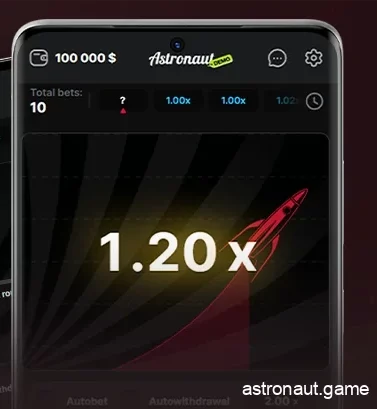
Most casino websites host an Astronaut demo:
- Open the game lobby.
- Click Astronaut and choose “Demo” or “Practice”.
- The game loads with a virtual balance instead of real funds.
Some stand-alone Astronaut sites also offer demo links without registration. Check the game page footer or the main menu.

What You Learn in Demo: Timing, Cash-Out, Shield Use
Demo mode lets you test:
- Different cash-out points and auto settings.
- Take Half usage in long runs.
- Dual bet patterns, such as safe + risky.
- Golden Shield timing and how it changes your choices.
Because no real money is at stake, you can freely track how different multipliers behave and how often you get wiped out by red crystals when you push too far.
Transitioning from Demo to Real Money Play
Before moving from demo to real stakes, ask yourself:
- Do I have a clear session budget and loss limit?
- Do I know my average target multipliers?
- Am I ready to lose this money without stress?
Once the answer is honest “yes”, you can start with the smallest real stakes available and treat it as paid entertainment, not a source of income. If losses affect your mood or daily life, pause play and consider self-exclusion or help lines in your region.
FAQ
Legality depends on your local laws and on the casino you use. Many sites host Astronaut under a Curaçao license or similar, but that does not automatically grant local approval. Always check your country’s regulations and the casino’s license page before depositing.
No strategy can guarantee profit. The game is built around random outcomes, with the house edge locked into the math. RTP only describes long-term averages, not a promise. Bankroll rules and cautious multipliers can slow down losses, but they cannot turn Astronaut into a profitable system in the long run.
Most technical pages list Astronaut around 95.5%–98% RTP, with many pointing to values close to 96% or slightly higher. The exact figure depends on version and casino settings, so always read the in-game help for the number that applies to you.
Public sources agree the Golden Shield is rare but do not publish a fixed frequency. You should treat it as a bonus element, not something to rely on every few rounds. Assume crashes are unprotected unless you clearly see the shield activated.
Neither option is “better” in every case. Take Half makes sense when you want to: lock a portion of gains and still give the run more room. Full cash-out is cleaner when you want strict discipline and simple records. Use demo mode to compare both styles with your normal bet sizes.
Astronaut’s base game math supports very high multipliers, sometimes listed around x48,000 or more. Some casinos, however, limit maximum payout for their own risk control. That is why you may see caps like x10,000 or x12,960+. Always read the casino’s terms on maximum win per round or per bet before playing.